Showing posts with label review. Show all posts

Saturday, April 13, 2013

Review: A Masked Ball (Opera Australia)


Giuseppe Verdi

Any Verdi opera promises to be a feast of lavish music, with voices, costumes and set design to match.  We have come for the music, for the endlessly soaring melodies, and for the grand spectacle typical of the late Romantic period.

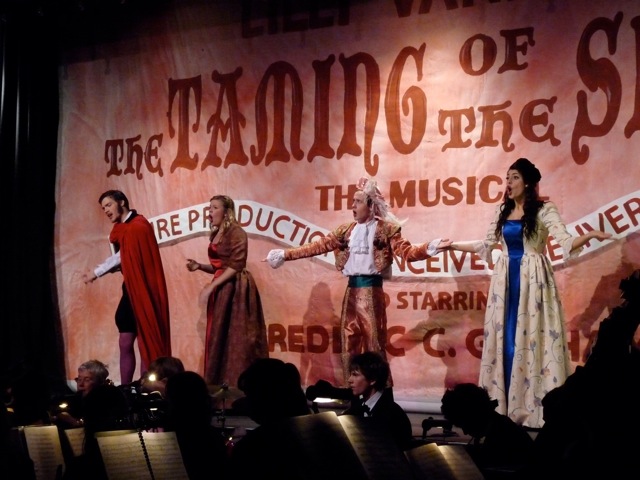
Soloists, Mexican Diego Tore (Gustave III), Hungarian Csilla Boross (Amelia) and Argentinian born baritone Jose Carbo (Count Ankarstrom), were warmly received, as was home grown talent Lorina Gore (Oscar) who thrilled with exquisite coloratura.

The dramatic highlight, below the gibbet towards the close of Act II, was the realisation of an intensely sinister overtone.

Orchestra Victoria, under the sensitive baton of Andres Molino, was silky smooth.

But all this was very nearly swamped. While I appreciate the artistic intention in contemporising this work through costumes and set design, it’s cold austerity failed to elicit any kind of empathy with the players, and occasionally distracted from the main event - the music. Continue reading on the Stage Whispers site here.

You may also be interested in
Savages: Misogyny at fortyfivedownstairs
10 Ways to Embrace Winter
Review: Blak (Bangarra Dance Company)
10 Ideas for the Queen's Birthday
More arts reviews, previews and features


Friday, February 1, 2013

Review: The Giraffe's Uncle (La Mama)


Essentially a one-hander, The Giraffe’s Uncle explores the life and person of Les Robinson, an absurdist writer in Sydney’s bohemia scene between the 1920s and 60s. Robinson was infamous for living in derelict houses and caves, writing, fishing and playing his gramophone, and refusing to pay rent.

Following the Sydney premiere in 2011, Kieran Carroll’s thirteenth play, restaged and revised for the Melbourne season, once again features actor Martin Portus who consolidates his return to the stage after 30 years.

Martin Portus is captivating, transporting us on the emotional rollercoaster of Robinson’s existence, his need to be embraced by bohemian colleagues, and his rejection, not of people, but of society.

Playwright Carroll describes Robinson as, ‘ a man of both indolent charm and sad anxiousness’, and as a ‘gloriously imaginative, idiosyncratic, catastrophically humorous and deeply alienated’ writer. Robinson wrote for several publications, but The Giraffe’s Uncle (1933) remains his only published short story collection.

Intuitive singer Darryl Emmerson is a charming addition to the Melbourne show and won me over with his gentle lyricism, and easy manner. So much so, the memory of my old grandfather singing crept into my head. Continue reading

You may also enjoy
I, Animal (Melbourne Zoo)
Romeo and Juliet (Royal Botanic Gardens)
War Horse (Arts Centre Melbourne)
Other reviews and articles

Saturday, January 19, 2013

Review: Romeo and Juliet (Royal Botanic Gardens)


After 25 years staging outdoor theatre it seems Glenn Elston is far from giving the game away. And why would he? A Glenn Elston production in the botanic gardens is as much part of Melbourne's summer tradition as the Boxing Day test, The Australian Open, free symphony concerts at the Myer Music Bowl and barbecues by the Yarra River.

Anyone who has ever played to an outdoor audience knows the investment in energy required, and the skills of this company ensure we are riveted from the moment Brendan O'Connor and Anthony Rive step out pre-show amongst the picnickers to draw us in. Continue reading

You may also be interested in
Glenn Elston - Outdoor Theatre: The Joys and Perils
I, Animal (Melbourne Zoo interactive theatre) 
More reviews and features

Friday, May 18, 2012

Review: The Laramie Project - 10 Years Later

The Laramie Project - 10 Years Later
In 1998 international media attention swamped the town of Laramie, Wyoming, when young gay university student, Mathew Shepard, was brutally bashed, tied to a fence on the town’s perimeter and left to die. 
One month later members of the Tectonic Theater Project conducted interviews of the town’s residents and presented a collage of their responses in The Laramie Project
Ten years later, the Tectonic Theater Project members return to Laramie and find memory being transformed by folklore and rumour, despite the documented facts. Continue reading

More previews, reviews and features

Wednesday, March 14, 2012

Review: How to Train Your Dragon - Arena Spectacular

My review of the World Premiere of How to Train Your Dragon - Arena Spectacular in Melbourne is now published online by Stage Whispers.

The production was a hybrid theatre-movie event, with projection just as important as the dragons themselves. As a spectacle it does well. However the audience needs to indicate its appreciation far more than it does. Parents, please teach your children how to clap their hands when patronising live theatre.

Read the review
Read my earlier media call wrap


Thursday, February 23, 2012

Review: The Seed (MTC)


My review of the Melbourne Theatre Company production of The Seed, featuring Max Gillies, Sara Gleeson and Tony Martin is now published online by Stage Whispers.
Read my review
More articles and reviews

Tuesday, February 14, 2012

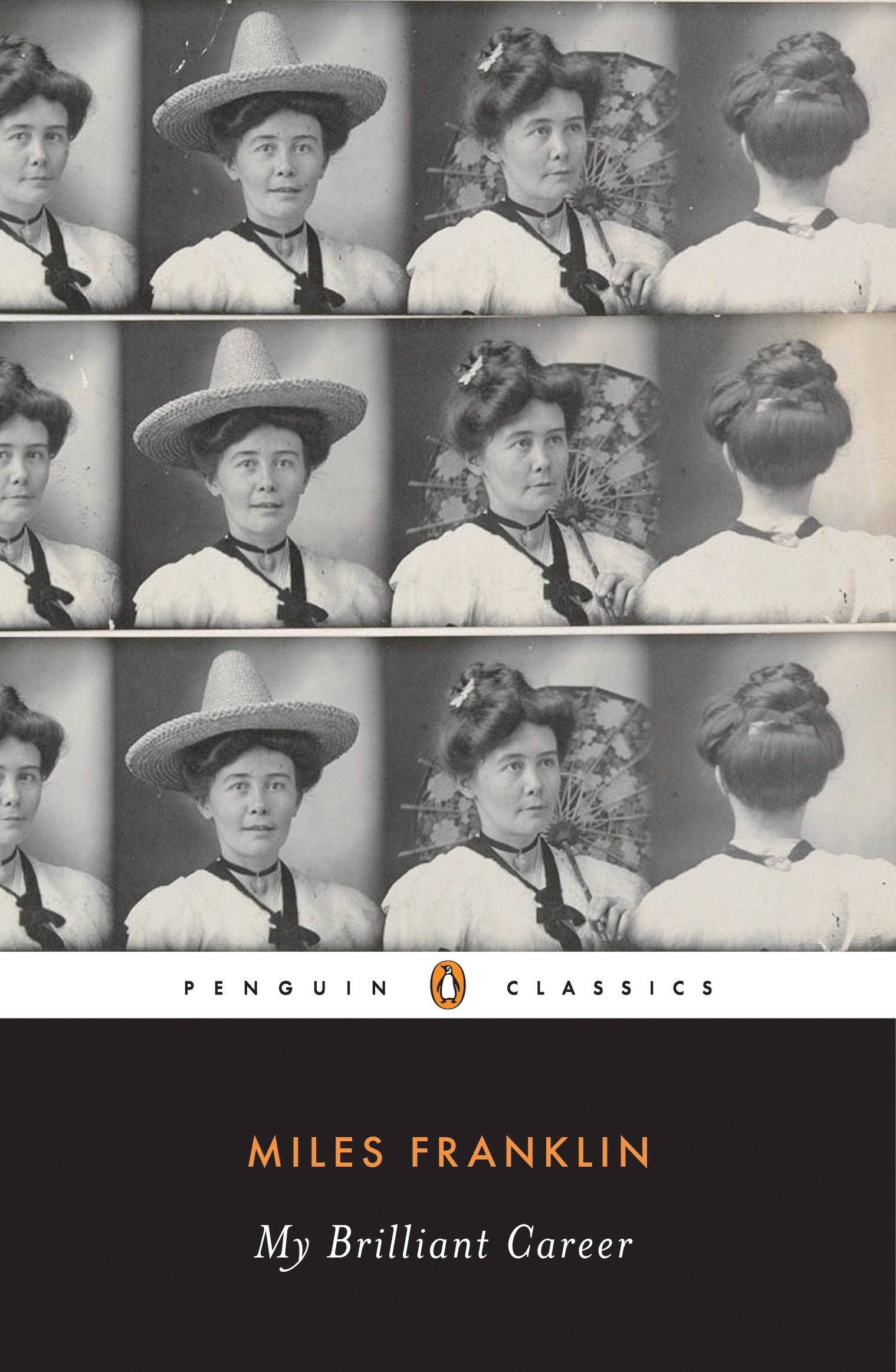
Miles Franklin: My Brilliant Career

2012 Book ChallengeI first encountered My Brilliant Career as a film when I was fifteen. I was, then, the same age Miles Franklin was when she wrote it, and as I too wanted to be a writer it made an indelible impression upon my dreamy adolescent self. As a budding feminist too, after seeing the film I resolved that if ever I married, I would be keeping my own name. The story met me soundly with its declarations about marriage, career, and a woman's struggle to find her way in the face of societal constraints.

And so I bought the book with my pocket money.

Published in 1901, My Brilliant Career included a preface by Henry Lawson, no less. It is a delicious read now, but at fifteen I found it wearisome. Sidelined by things I did not understand like quarts, the D of his saddle, green hide and mullock, I grew impatient. To my mind it echoed the dreary school room literature I was being subjected to elsewhere, which seemed completely irrelevant to my teenage sensibilities. I don't believe I finished reading it.

Last January, I joined the Australian Women Writer's Challenge and began plundering the bookshelves of friends and family. And there it was on the shelves of my parents' study, my name girlishly swirled inside the front cover. Bonanza, I thought, this is just the one to catapult me into the AWWC. And I took it away to the beach.

My Brilliant Career contains so many reminders of myself at that same age, that I chuckle to myself and wonder how I failed to recognise them. Perhaps Franklin's sentiments were so close to mine, that I thought little of them. Like many teenage writers, Franklin is afflicted by exclamationitis! The text is infused with angst, frustration and longing. Passion oozes off each page with sighs so heartfelt and self-obsessed it is close to a teenage diary.  
Book Cover:  My Brilliant Career
But while most teenagers keep their journals under lock and key, fearing they will be exposed, Franklin sent her's to a publishing house. It's clearly autobiographical, does the author not say as much herself in the introduction?: My dear fellow Australians, Just a few lines to tell you that this story is all about myself - for no other purpose do I write it.

And yet after its publication, the public connection between Franklin's family and friends and the characters in the story reportedly caught her unawares. It is as if the novel is a kind of 20th century social media message in which too much is said, and the only mystery surrounding the fallout is how the author can possibly be surprised at it's effect.

But while Franklin's observations about gender politics are advanced for their time, her references to indigenous people are discomforting. Apparent compassion for countrymen trudging past in search of work only extends so far. With the benefit of hindsight, one can't help wondering if the snivelling little Queensland black boy kept by Harry Beecham as a sort of black-your-boots, odd jobs slavey was because he had been taken far away from his family against his will.  Even when the protagonist Sybilla is sent away from home to work, the comparison in circumstances is not drawn.

I am completely delighted to have rediscovered My Brilliant Career for myself and to have been reminded of its influence on me. In it's preface, Henry Lawson writes: I hadn't read three pages when I saw what you will no doubt see at once - that the story had been written by a girl....I don't know about the girlishly emotional parts of the book - I leave that to girl readers to judge; but the descriptions of bush life and scenery came startlingly, painfully real to me. If it were possible, I would assure Mr Lawson that as an expert in such girlish emotions, I can vouch for their realism, just as the scenic descriptions resonated with him more than a century ago.

Biography: Miles Franklin

You may also enjoy reading Ray Lawler: Summer of Our 90th Year


Wednesday, February 1, 2012

Taking up the 'Australian Women Writers Challenge'

2012 Book Challenge

There's nothing quite like a new year to inspire a fresh challenge. GIven this year has been declared the National Year of Reading in Australia, I have put my hand up for the 2012 Australian Women Writers Challenge. 

What is the challenge and why is it necessary you may cry. Surely there is no need for affirmative action in 2012. Well (ahem) the statistics would appear to suggest otherwise. 


Here's Jane Sullivan in the Sydney Morning Herald:
The whole business of books, reading, writing and publishing is dominated by women. We live, after all, in a society where literature in many ways is a woman's world. Women write about half the books published. Sixty-two per cent of publishers are women (although most senior roles are held by men). Women make up 80 per cent of fiction readers. And according to British research, they buy almost twice as many books of all kinds as men do. And yet there remains a perception that compared with men, women writers and their works, both past and present, are far more often marginalised, belittled, pigeonholed, dismissed, ignored.

Until recently, I would have said that's all it was: a perception, neither proved nor disproved. Then last year, I read some statistics. An American women's literary organisation, VIDA, did a survey of how some of the most important and influential British and American literary and cultural journals looked at books in 2010.
I was shocked to discover that The New York Times Book Review reviewed nearly two books by men to every one by a woman — and that was one of the more generous figures. There are similar figures for GrantaThe Paris Review andPoetryThey measured up both the numbers of book reviews written by men and by women and the number of books written by men and women that were reviewed.

It gets worse. The New Republic reviewed 55 books by men and nine by women. At The New Yorker it was 33 books by men, nine by women. At The New York Review of Books, 306 books by men and 59 by women. At The Times Literary Supple-ment, 1036 books by men and 330 by women.
Read more

So, dang it all, I'm up  for it. 
Book Cover:  My Brilliant Career

The AWW challenge allows or various levels of engagement. 
I've categorised myself as a 'Miles dabbler' which means I've committed to read 6 and review at least 3 novels by Australian women by year's end. Read more about the challenge.


Over January I spent many delicious hours revelling in a reading of My Brilliant Career, written by an angsty 16 year old Miles Franklin, and published in 1901. 


I first encountered the story when I was 15, via the captivating movie starring Judy Davis, Sam Neill and Wendy Hughes. It had quite an influence on me at the time. 


My reflections on the novel will follow soon on this blog, but I am most certainly after the dvd to add to our collection. 


Next will be Kate Grenville's historical novel, The Secret River. I've selected this because I completely adored The Idea of Perfection which won Grenville the Orange Prize.


Beyond that I will see what tickles my fancy as I'd like to include some hot off-the-press and young adult titles. 


Until then...


Catch up on my AWWC reading to date, together with other literary reviews here.

Friday, September 23, 2011

Friday, September 16, 2011

Wednesday, August 31, 2011

Wednesday, August 10, 2011

Review: Kiss Me Kate (Ringwood Secondary College)

At Ringwood Secondary College this afternoon, shots were fired, a bird dropped dead, faces were slapped, pot plants hurled, people were deceived, and a whip was cracked. Luckily it was all in the script.

Read my review of the preview performance given to a largely primary school audience yesterday afternoon. If you're a local, why not buy a ticket.  

Friday, March 18, 2011

Review: Cafe Scheherazade (play)

My review of Cafe Scheherazade by Therese Radic (based on the novel by Arnold Zable) is now published by Stage Whispers.

Cafe Scheherazade is playing at fortyfivedownstairs, 45 Flinders Lane, Melbourne until 3rd April, 2011. It is commended as a compelling 90 minutes of theatre which may prompt a dose of self-reflection.

Have a gander at Lucy's other reviews